


FACC is anchoring safety awareness even more strongly in the training and further education of the entire workforce. The numbers speak for themselves: Aircraft are the safest means of transport in the world. For example, flying is about 20 times safer than traveling by train, 1,200 times safer than using a car, or 10,000 times safer than using a motorcycle. This is because the entire aviation industry has established strict safety and quality standards since many decades, which always put the safety of passengers first. Aviation safety is understood as a holistic approach that encompasses safe operations, processes and technologies, from aircraft manufacturing and maintenance to ongoing operations.
CEO Robert Machtlinger commented: "For over 35 years, with its products and solutions, FACC has been contributing to making flying the safest means of transport in the world today. With the new FACC Safety Center, we are anchoring the topic of safety even more firmly in the training and continuing education of our crew, making us one of the forerunners among suppliers to the international aviation industry worldwide."

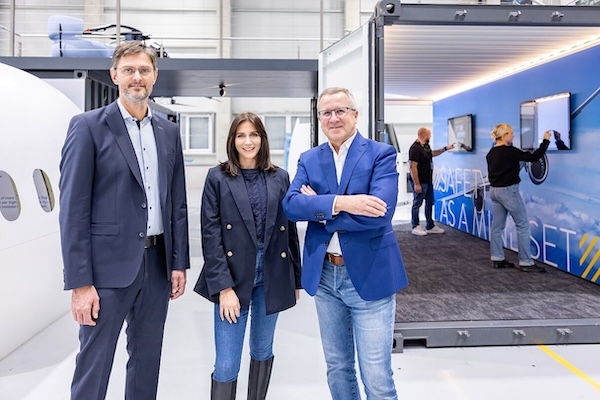
In order to further strengthen the aspect of safety in the training and further education of the entire workforce in the future, the FACC Safety Center as a new training and test area for the topic of safety has been built in the FACC Academy in recent months and has now been put into operation. Employees are given a deep understanding of the importance of safety through specific case studies and interactive training content. The focus is on raising awareness for the responsibility of each individual employee, who can contribute to even greater safety beyond existing standards. Emphasizing an open culture of communication and a “just culture” is also an essential part of the training concept. This is because people, as the “human factor,” control and monitor all processes and are therefore the decisive element in improving safety in aviation.
While the focus of manufacturing and maintenance companies has so far been on the conformity of products and processes, in recent years the aspect of safety has been emphasized even more strongly and systematic safety management has been added. Development and production organizations such as FACC take on more responsibility for the topic of safety and systematically evaluate safety-relevant influences, such as human factors, the ability to work in a team and many more. In doing so, they go beyond the fulfillment of existing approval criteria and safety standards.
U.S.-based aircraft management, fractional ownership, jet cards, and charter services operator Airshare is equipping its fleet of Embraer Phenom 300s with the Gogo Galileo HDX system. The up...
AERO 2027, taking place from April 14-17, 2027, will feature a further developed concept designed to build on the great success of this year’s event. In 2026, 860 exhibitors from 50 countries to...
Lufthansa is focusing more than ever on premium service: Following the introduction of the new in-flight service on all long-haul flights in early May, the number of destinations where passengers can...
The A350-1000ULR (MSN 707), the first of 12 aircraft ordered by Qantas has completed its first flight in Toulouse, France. The aircraft, fitted with special flight test instrumentation, flew for three...