


The Airline Pilot Standards Multi-Crew Cooperation was introduced by EASA in 2017 and began gaining visibility around 2018 – the shift towards it was a gradual one. But with more European carriers, such as Wizz Air, Ryanair, and easyJet, making it a requirement for their pilot recruitment, the landscape for new pilots gunning for First Officer roles has now started to change, says Danielle Roos, Chief Theoretical Knowledge Instructor at BAA Training.
Adoption of APS MCC accelerated significantly between 2021 and 2024, when the previously mentioned European low-cost carriers began specifying APS MCC as a preferred or required qualification in recruitment. This reflected airlines’ growing focus on recruiting pilots who are already familiar with airline-style operational environments. According to Roos, it can lead to improved Type Rating success rates, reduced training adaptation time, and enhanced overall training efficiency.
Danielle Roos commented: “While the standard preparation for airline-bound pilots – the combination of Multi-Crew Cooperation and Jet Orientation Course – provided important foundational skills, it was typically delivered in a generic training environment that didn’t fully replicate airline-style operations. The MCC and JOC were conducted as separate modules, and training scenarios weren’t always structured around realistic airline operational workflows, Standard Operating Procedure integration, or line-oriented flight scenarios. APS MCC represents an evolution of this model.It’s been proven that such an integrated approach better prepares pilots for the operational and procedural demands of the modern airline environments."
The APS MCC integrates and expands both MCC and JOC elements into a single, airline-oriented framework, placing greater emphasis on airline-style SOPs and competency-based training, aligned with modern airline methodologies like Competency-Based Training and Assessment and Evidence-Based Training, among other key areas.
LCCs seen as the early-adopters
Why was it that the LCCs were the early adopters of APS MCC rather than legacy carriers? According to Roos, low-cost carriers are structurally incentivized to optimize training efficiency and reduce operational risk during pilot induction.
“Factors like operational standardization, reduction in Type Rating risk and costs, competency-based training alignment, and higher training output requirements affect LCCs on the regular, and they need to find ways to optimize all of this. Legacy carriers, on the other hand, historically have relied more on integrated cadet programs or internal training pipelines. Now, however, they are set on integrating APS MCC as well.”
While it’s the LCCs that are embracing APS MCC adoption more quickly, the advanced training is increasingly becoming the benchmark in Europe for others to follow. This is accelerated by a couple of factors. The environment right now is creating a need for APS MCC. Continued pilot demand and high training volumes, as well as the desire to reduce Type Rating failure rates. Additionally, as airlines adopt CBTA and EBT training methodologies, they seek standardization benefits across their recruitment pipelines, which leads them towards APS MCC.
Implementing APS MCC more quickly
There are, however, some factors that might slow adoption. Among smaller airlines with lower recruitment volumes and airlines that rely primarily on internal cadet programs, Roos draws particular attention to the training capacity limitations. The biggest hurdle is ensuring the simulator and instructors are available.
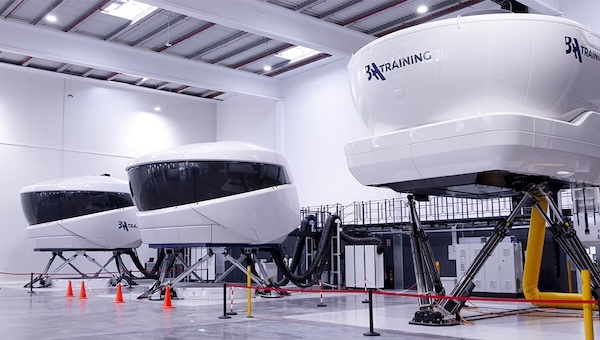
“APS MCC requires training on FNPT II or higher-level devices that are capable of replicating an airline-style environment. That means there’s an increased demand for simulator availability and high-fidelity operational scenarios. Instructors also need to have strong airline operational experience, among other competencies, so instructor standardization becomes critical to maintaining course quality.
“This is where pilot training academies, like BAA Training, for example, come in. With sound training device infrastructure and qualified, experienced instructors in place, we have already adapted to overcome these challenges and meet the standards.”
APS MCC as a competitive differentiator
As APS MCC continues to gain traction across Europe’s aviation landscape, the question is no longer whether it will become standard, but how quickly the transition will be completed, and whether other regions will follow Europe’s lead.
What began as an LCC-driven efficiency initiative has evolved into a recalibration of First Officer preparation standards. The shift signals a broader industry recognition that bridging the gap between flight school and airline operations requires more than foundational skills; it demands realistic exposure to the operational rhythms and decision-making frameworks pilots will encounter from day one.
For airlines and training organizations alike, the infrastructure and expertise required to deliver APS MCC effectively will increasingly separate industry leaders from those struggling to keep pace with modern operational demands.
The European tour of Daher Aircraft’s “go-anywhere” Kodiak 900 multi-role airplane continues this week at the France Air Expo 2026 event in Lyon, France, where it will join a fast, e...
Lufthansa is focusing more than ever on premium service: Following the introduction of the new in-flight service on all long-haul flights in early May, the number of destinations where passengers can...
The A350-1000ULR (MSN 707), the first of 12 aircraft ordered by Qantas has completed its first flight in Toulouse, France. The aircraft, fitted with special flight test instrumentation, flew for three...
For more than twenty-five years, Jetfly has been developing its Shared Ownership Program, focusing in particular on the Pilatus PC-12, a turboprop aircraft renowned for its versatility, reliability, a...