


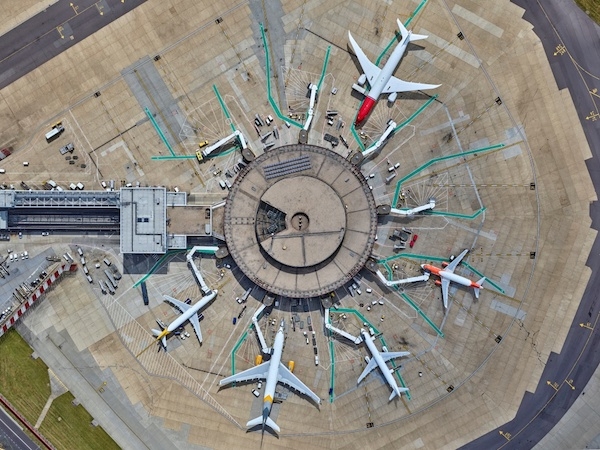
Gatwick is publishing its new five-year Capital Investment Programme (CIP) which highlights more investment in automation and technology as an enabler of sustainable growth. New initiatives include robotic parking and automated boarding technology, which will speed up boarding and give passengers more choice about how they spend their time.
Gatwick’s total investment since 2009, combined with this new five-year plan rises to £3.21 billion. Gatwick now serves 46 million passengers a year, and the airport is committed to exploring how to continue growing sustainably, providing jobs and boosting the local economy. While setting out an exciting long-term future vision is part of Gatwick’s recently published master plan, at the same time the CIP provides a strong focus on improving facilities for passengers and airlines, as well as continuing to enhance operational performance
The single biggest project to be delivered within the next five years is the Pier 6 western extension which will offer over half a million more North Terminal passengers the opportunity to embark and disembark their aircraft via a jetty-served stand, as well as improved gate waiting areas. The design incorporates automated boarding technology which uses biometrics to process passengers through e-gates straight onto the aircraft. Similar projects successfully run by other VINCI Airports will provide inspiration for the Pier 6 extension’s coffee shops and retail, which will ensure passengers can enjoy these facilities right up to the point of boarding.
Several new projects are identified within this CIP, and some exciting emerging projects that will be explored this year are also highlighted:

New Projects include:
Emerging Projects include:
The CIP also continues Gatwick’s strong environmental commitment. By joining VINCI Airports’ global AirPact policy – the first-ever integrated environmental programme in the airport industry – Gatwick will share best practice with the rest of the network on a number of projects in the CIP, notably electric and hybrid vehicles and recycling facilities.
Gatwick’s Chief Executive Officer, Stewart Wingate said:
“We always put passengers at the heart of our investment plans and it’s great to see how automation and technology can further enhance the passenger experience. The plans explore ways we can grow capacity sustainably, including providing more space in our departure lounges. This investment will support our existing airlines, help attract new airlines and provide an enhanced service for the millions of people who choose to fly from Gatwick.
“We have outlined our long-term growth strategy in our final master plan and the Capital Investment Programme we are sharing today, gives a more detailed view of our short-term plans which will continue to improve our service proposition and lay foundations for the future.”

Nicolas Notebaert, CEO of VINCI Concessions and President of VINCI Airports, said: “Belonging to the world’s most extensive and diversified network of airports is a unique opportunity for each one to get inspiration and capture the best airport management worldwide. As such, Gatwick’s Capital Investment Programme will benefit from sharing best practice through the VINCI Airports’ network and tap into the extensive expertise in programme management, customer experience and innovative new services such as robotic parking.
“We look forward to participating in delivering this great project at Gatwick over the coming years, which is consistent with our global vision of contributing to a more accessible sustainable and passenger-focused experience.”
The Capital Investment Programme is a rolling five-year plan which is published annually. This allows the CIP to be refreshed regularly as market conditions and operational needs change. It is published on the Gatwick website and can be found here. Last month, Gatwick also published its final master plan setting out how the airport could develop in the most sustainable way over the next 15 years. The master plan sets out three key areas to help deliver additional capacity, resilience and improved operational performance at the airport: 1) using new technology to make best use of the main runway; 2) the preparation of a planning application to bring the existing standby runway into routine use; and 3) the continued safeguarding of land should a new runway be required in the longer-term, although Gatwick is no longer actively pursuing plans for an additional runway. The final master plan follows a 12-week consultation period that saw over 5,000 responses from the local community, businesses and other key parties, with two-thirds (66%) of respondents supporting Gatwick ‘making best use of its existing runways’ in line with Government policy.

Kansai International airport (KIX) reaches new milestone in its development with the inauguration of the completed international trade zone. This completion marks the conclusion of the extensive renov...
Cirrus launched Let’s Go Fly!, a first-of-its-kind app created for Apple Vision Pro that delivers an immersive introduction to Personal Aviation—the freedom, convenience and acce...
Deutsche Aircraft is preparing its most comprehensive showcase to date, highlighting the evolution of its future ready, multi role aviation portfolio designed for governmental and mission critica...
Lufthansa is focusing more than ever on premium service: Following the introduction of the new in-flight service on all long-haul flights in early May, the number of destinations where passengers can...