


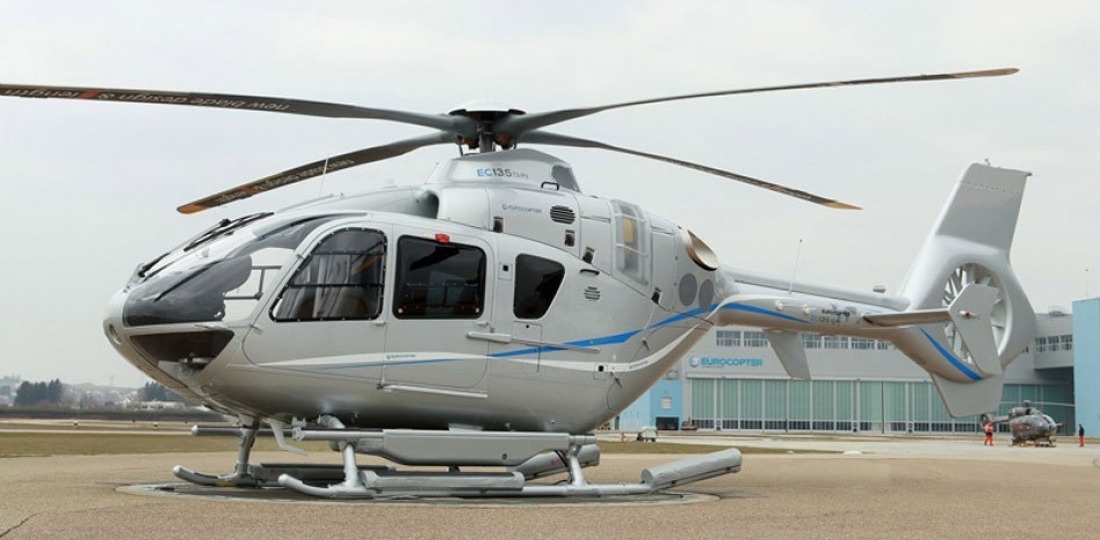
A helicopter industry ahite paper originally released in June 2015 deals with making it easier to facilitate IFRflight in single-engine Part 27 rotorcraft. The paper was formally forwarded to the FAA for evaluation late last year. The industry has long maintained that the equipment required makes instrument flight uneconomical and impractical under Part 27 rules and that this has an adverse safety and economic impact on all operators, but particularly helicopter emergency medical services (EMS), which must either fly in marginal weather or refuse the mission.
The industry associations, including HAI, American Helicopter Society, Aircraft Electronics Association and the General Aviation Manufacturers Association, believe that “it is the FAA’s duty to the rotorcraft industry to provide a practical option for IFR conditions other than 'don’t fly'–especially when that practical option previously existed. Once Part 27 single-engine IFR becomes viable, it will be demanded by hospital organizations as a condition ofEMS contracts–much in the way IFR capability is demanded today for twin-engine [Part 29] rotorcraft in EMS.” The associations also note that adopting Part 23 fixed-wing avionics to Part 27 helicopters, designed as an economy move, can actually be exceedingly costly.
The associations noted that among civil single-engine Part 27 helicopter fleets worldwide, between 2001 and 2013 there were 194 accidents related to inadvertent flight into instrument meteorological conditions (IIMC) or controlled flight into terrain (CFIT); 133 were fatal, killing 326, and 57 of those accidents were in the U.S. None of the accident helicopters was IFR equipped.
Conversely, during the same period for multi-engine Part 27 and Part 29 rotorcraft worldwide, there were 54 accidents related to IFR, IIMC or CFIT due to low-level flight into bad weather, and 46 were fatal. However, 40 involved rotorcraft attempting to fly under VFR; only seven were conducted under IFR. Twelve of these 54 accidents occurred in the U.S. The study reported, “In most cases the multi-engine rotorcraft were IFR equipped, but often either the pilot had no instrument rating, was not current or had minimal instrument experience and was not confident in IFR procedures. In addition, most of the rotorcraft involved were models with older 'steam gauge' style IFR instrumentation. These require a much greater degree of skill to interpret than modern displays, and therefore require a greater degree of practice in order to remain proficient.”
The associations maintain the problem is far worse than what the accident data suggests. “What is not captured in the accident data are the near misses of obstacles and terrain that occurred trying to avoid weather or the near losses of control that occurred attempting to exit IIMC. The erratic year-to-year data is indicative of a broader issue where a high-risk practice of ‘scud running’ is prevalent and what is captured in the data are the aircraft that failed in the gamble.” While the study noted recent FAA rule changes and higher VFR minimums primarily aimed at the helicopter EMS industry and Part 135 operators, it added, “A culture of IFR operation cannot be cultivated where the largest population of rotorcraft, and almost all training rotorcraft, are not IFR certificated” as opposed to fixed-wing aircraft.
The study goes on to note that the “number of single-engine rotorcraft IFR certifications has dropped from several in the 1980s and 1990s to virtually none since 1999. This is in spite of technology such as [GPS] area navigation and [WAAS] GPS approach procedures which make IFR flight more relevant to helicopter operations than in the 1980s and 1990s.”
The study pointed out that data from the FAA Capstone program in Alaska from 1999 to 2006 demonstrated a 38-percent fatal accident rate reduction when modern technology was adopted over traditional steam gauge displays when flying IFR. Therefore, the study surmised, “Certifying single-engine helicopters for IFR with systems that are ergonomic and confidence-inspiring will lead to increased use of the IFR system and improved situational awareness during VFR operations. It is reasonable to speculate that as pilots choose to conduct operations IFR instead of VFR, fatal IIMC, CFIT and certain accidents attributable to loss of control will be eliminated. Successful and safe completion of missions under IFR will have a snowball effect throughout the industry.”
However, for this to occur, the associations argue that regulatory relief must be forthcoming in the form of decoupling the certification requirements for Part 23 fixed-wing avionics systems and those for Part 27 rotorcraft. “The relatively small rotorcraft market has traditionally relied on Part 23 airplane-derivative systems and equipment to achieve financial practicality. But, as certification requirements for Part 23 airplane systems and equipment are reduced (especially in terms of Design Assurance Levels and equipment qualification), adapting low-cost, Part 23 technology to the Part 27 helicopter market becomes impossible in some cases, and in others, impractically costly.”
ExecuJet MRO Services Australasia is expanding its Falcon maintenance capability in Sydney, with new investments in specialist tooling, training and technical resources to support upcoming Falcon 7X h...
Cirrus launched Let’s Go Fly!, a first-of-its-kind app created for Apple Vision Pro that delivers an immersive introduction to Personal Aviation—the freedom, convenience and acce...
Air passenger rights in Europe are at a critical crossroads. On June 2, the European Union’s Conciliation Committee will meet for a final round of negotiations on the revision of the European re...
Baltic Ground Services, an international provider of ground handling and aircraft fueling services, has expanded its cooperation with Turkish leisure carrier Freebird Airlines across several airports...