


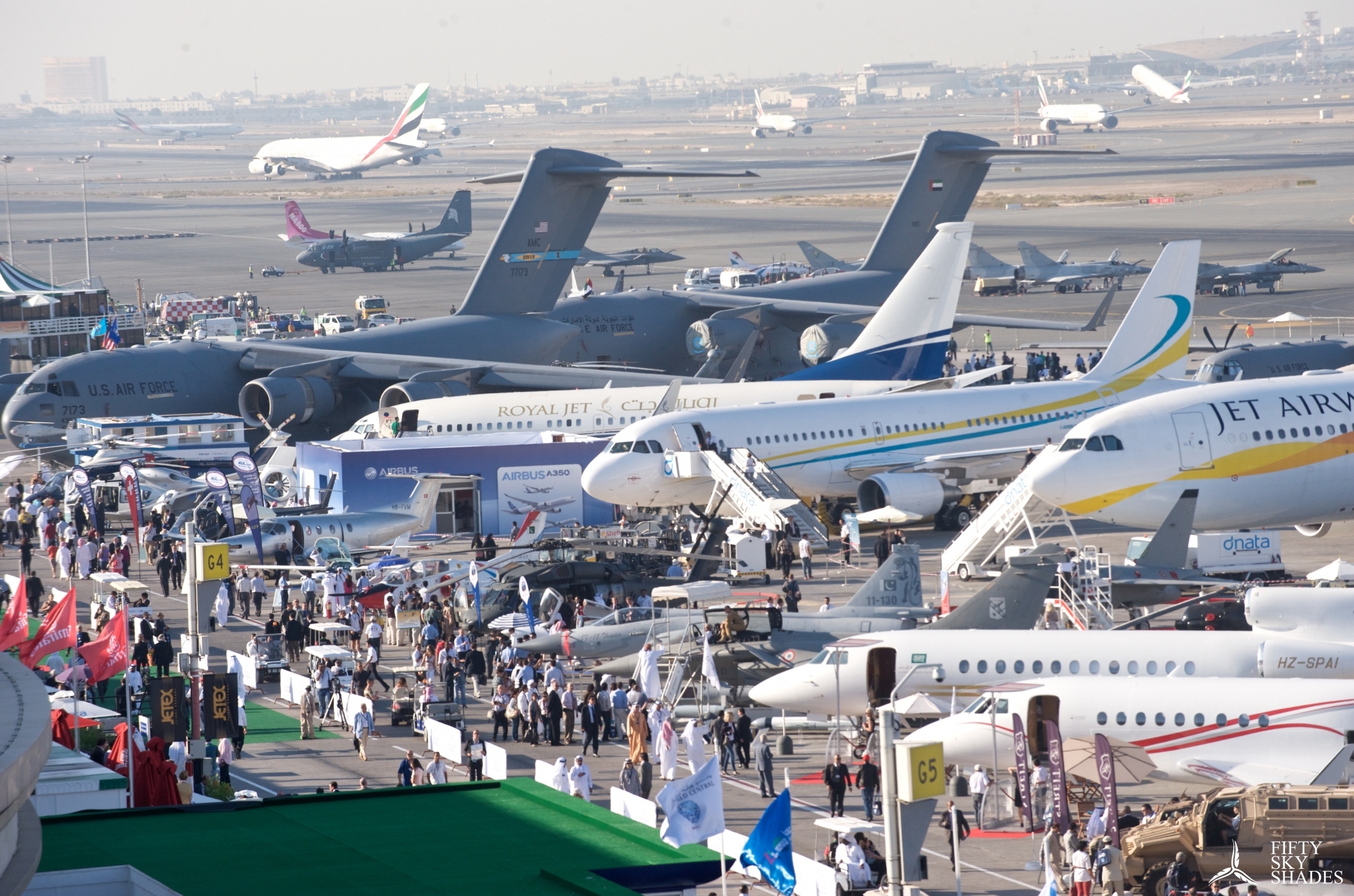
After three years of record jetliner orders, planemakers are bracing for a slowdown in new commitments at the Dubai Airshow which opens on Sunday under the shadow of recently falling oil prices and conflicts in the Middle East.
Barring traditional show surprises, delegates attending the biennial Nov. 8-12 event predicted a drop in major commercial order announcements as Gulf airlines take stock after expansion.
The aerospace industry is putting a brave face on the slowdown, saying the tally of more than 400 orders at the 2013 edition was never going to be repeatable. But analysts will be scanning the announcements for any evidence that the dip is more than a return to normality.
Aerospace investors are concerned that a glut of wide-body jets rolling off production lines towards the end of this decade could put pressure on aviation, just as doubts gather over the pace of economic activity.
"A lot of airlines have bought aircraft to capture the same growth," said Ben Moores, senior analyst at IHS Aerospace, Defence & Security.
That does not mean the Nov. 8-12 bazaar, where airliners and arms buyers mingle at Dubai's newest aviation hub, will be lacking in financial or military firepower.
Major General Ibrahim Nasser Al Alawi, commander of the UAE Air Force and Air Defence, said over $206 billion in orders were booked at the 2013 Dubai air show, adding: "This year's air show is on course to be even bigger and better."
Boeing said on Saturday it remained confident about long-term jetliner demand, particularly in the Middle East which is expected to need more than 3,000 jets in 20 years.
Etihad Airways may emerge as the buyer of 10 777X jets listed anonymously on Boeing's website, Gulf sources said, though an announcement may not happen at the show. Both companies declined comment.
Deals
The recent commercial order boom is expected to lead to deals putting parts manufacturing back into the UAE and India at the show. And in defence, at least four Gulf nations are negotiating new fighter purchases.
UAE officials told the Dubai International Air Chiefs conference it would extend spending on air power and other items, despite the cost of fighting against insurgents in Yemen.
But executives see some Gulf countries pulling back on military modernisation programmes, even though IHS's Moores noted the region's biggest buyers were most able to weather lower oil revenues.
Qatar is seen likely to slow plans to acquire Lockheed Martin's THAAD missile defences, but others like Saudi Arabia are accelerating their orders.
"We're anxious to see what happens to the weapons projects," said one executive.
Lufthansa is focusing more than ever on premium service: Following the introduction of the new in-flight service on all long-haul flights in early May, the number of destinations where passengers can...
Bombardier Defense will provide three Global 6500 aircraft to fly maritime surveillance missions for the Australian Border Force. Metrea - the originator and leading provider...
AIR announced a strategic partnership with Dynon Avionics as its exclusive avionics provider across its aircraft portfolio. The portfolio includes the AIR ONE personal eVTOL and the company&...
Which strategy leads to cost-effective, climate-friendly aviation in 2070? Four scenarios from the Bauhaus Luftfahrt think tank illustrate the impacts of different transformation paths. Key points: In...