


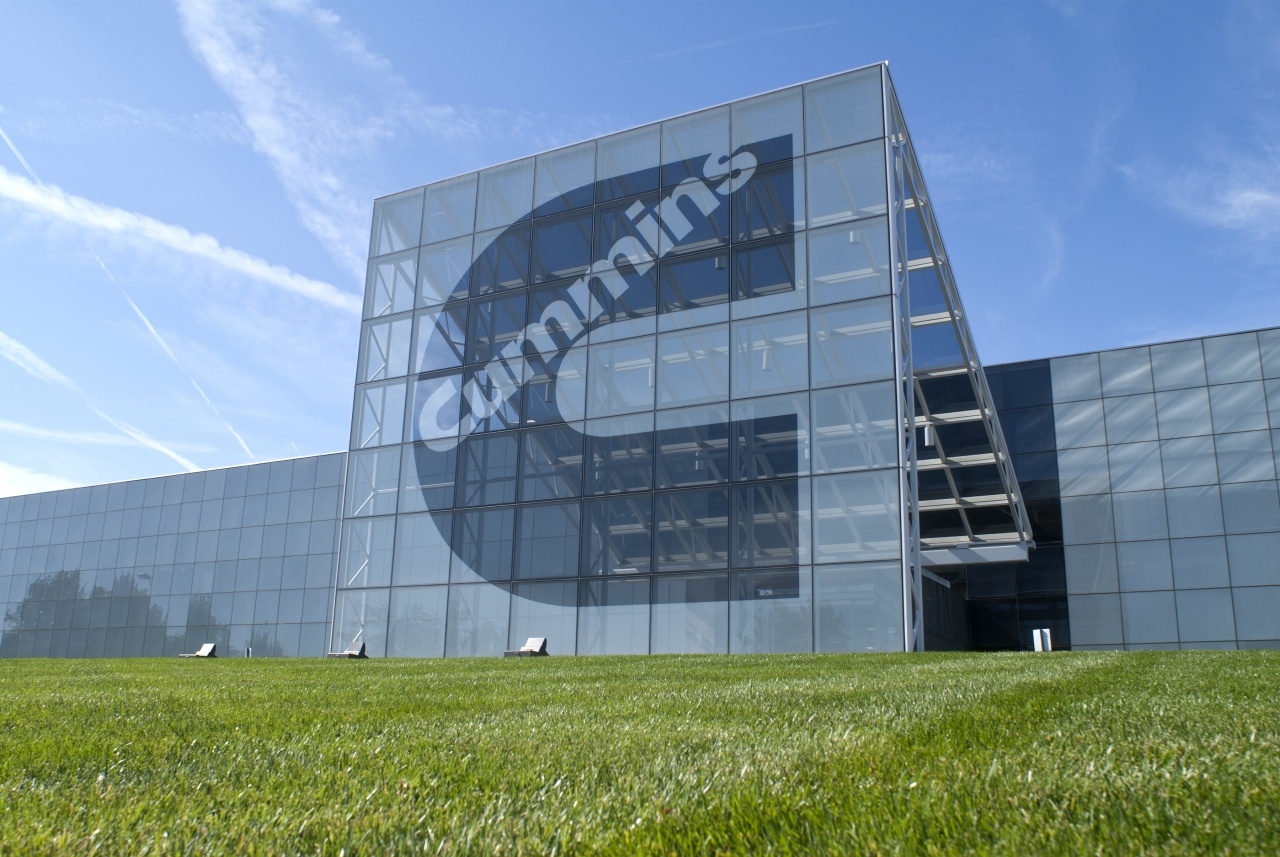
By analyzing travel data, engine maker Cummins fine-tunes its flight operation.
Cummins uses three Gulfstreams and one Embraer regional jet to meet its wide-ranging air travel needs.
Chris Raskob has landed on airstrips in Northern Canada where there are few roads. As the Director of Corporate Aviation for Cummins Inc says, “We fly to a lot of places you can’t get to any other way.”

A manufacturer of heavy-duty engines and power-generation equipment, Cummins has customers operating its products in some hard-to-reach locations. It also has factories and offices at nearly a dozen sites across North America. The company’s three Gulfstream G280s enable managers and executives to service customers globally on short notice. Cummins’ Embraer ERJ-135 shuttle connects employees to 11 regular destinations from company headquarters in Columbus, IN.
“Aviation is a service we’ve come to rely on,” said Shelley Stewart, Executive Director of Global Security. “It’s become an integral part of the way we do business. Cummins’ mission is to make sure customers succeed; the aviation department is here to facilitate that mission.”
Without business aviation, Cummins couldn’t run a global manufacturing and distribution business. Its Columbus headquarters – and the entire Southern Indiana region where it has a network of offices and factories – is an hour and a half drive from the nearest commercial airport. No wonder that Cummins’ four aircraft flew a total of 2,400 hours and carried over 10,000 passengers in 2014.
CHANGING SCHEDULES
The Gulfstreams’ mission is on-demand flying, and “we usually have changes to our schedule hours before a flight,” said Brian Patterson, Chief Pilot on the G280s and Executive Aviation Manager. “The nature of our business is last-minute changes.”

While trips to isolated mines or oilfields are not uncommon, most of the Gulfstreams’ flying is to customers in small towns across the Midwest and South that don’t have airline service.
As a way to control total costs, Cummins will often dispatch the Gulfstreams from its base on Columbus Municipal Airport to a major commercial hub, such as JFK or SFO, to drop off passengers for an overeseas airline flight. When it’s more efficient, the Gulfstreams fly internationally.
On one trip to Northern Canada, Raskob flew a senior leader and a power technician to see a customer.
“They were doing different work on the same trip, both equally valuable to the company,” explained Raskob. “It’s not necessarily about who’s on the airplane, but how they are meeting the business need.”
SHUTTLE SCHEDULE SET IN ADVANCE
As flexible as the Gulfstreams are, the shuttle is fully scheduled a year in advance. Any employee in the company can log onto the Cummins intranet and reserve a seat. Reservations are firstcome, first-served. On most legs, the 30-seat ERJ-135 is filled with all types of employees.

Cummins began its shuttle operation in the 1970s with a Gulfstream G-I. Until recently, the department flew a Dornier Jet before acquiring the Embraer ERJ-135 from a regional airline in 2014.
“The shuttle service started with making the same out-and-back flight everyday,” said Raskob. “But we were getting more than just daytrip travelers. That’s why we evolved into our current [operating] model.”
Some of the sites that the Cummins shuttle visits are so far from airline service, that the only alternative way for people based at those locations to travel to Southern Indiana is to make an 8-hour drive. “So we’re their link to the world,” explained Raskob.
USING DATA TO OPTIMIZE SERVICE
It takes a month for the shuttle to visit all 11 destinations, including Cummins’ power-generation business in Minneapolis, MN; administrative offices in Nashville, TN; a factory in San Luis Potosí, Mexico; and auto customers in Detroit, MI.
“We see Jamestown [NY] and Rocky Mount [NC] weekly; other sites we’ll visit only once during the month,” said Raskob. “Another variable is how long we spend at different stops. Whereas some sites need two round trips on one day; others need an overnight.”
Designing that schedule takes a sensitivity to passenger demand.
“Because the shuttle is so fully utilized, we only see when demand drops,” said Raskob. “So we go to our corporate travel vendor, and they generate reports based on employees’ airline ticket purchases.”

The flight department continually uses operating data to tweak the shuttle schedule. “Chris and his team work really closely with the passengers who are traveling and the business units who are receiving them,” said Stewart, “to understand their needs for the next year.”
On some routes, such as Minneapolis to Columbus, the shuttle is competitive with the cost of airline travel.
SHIFTING OPERATIONS TO PART 125
Until Cummins acquired the ERJ-135, it had never flown an aircraft with more than 19 seats.
“The department hadn’t operated anything this big before,” said First Officer Michael Monday. “There was a different set of challenges. We had 30 people gathering before a flight, which was hard for some FBOs to accommodate.”
Putting the ERJ-135 into service required an FAR Part 125 certificate, which also meant carrying flight attendants, something Cummins had never done before.

Lee Blake, Chief Pi lot and Manager – Corporate Shuttle, has long been a member of NBAA’s Corporate Shuttle Working Group, and he went to the group for advice on integrating flight attendants into his operation.
“We realized that to staff the shuttle effectively, we needed two-and-a-half full-time flight attendants,” said Blake. Cummins decided to hire contract flight attendants through a staffing service. “They’re dedicated to our operation and trained to our standards.”
While Cummins waited for its Part 125 certificate, the flight attendants began flying onboard the Dornier jet to learn Cummins’ culture. This also helped passengers get accustomed to cabin service, safety briefings and having crew available to answer questions.

Bell Textron delivered new Texas Department of Public Safety’s Bell 407GXi. This delivery comes on the heels of an announcement made during Verticon earlier this year h...
Affirming Cathay’ ongoing commitment to growing Hong Kong’s connectivity with Belt and Road countries, Cathay Pacific is pleased to announce plans to launch direct flights to Almaty,...
For more than twenty-five years, Jetfly has been developing its Shared Ownership Program, focusing in particular on the Pilatus PC-12, a turboprop aircraft renowned for its versatility, reliability, a...
Baltic Ground Services, an international provider of ground handling and aircraft fueling services, has expanded its cooperation with Turkish leisure carrier Freebird Airlines across several airports...