


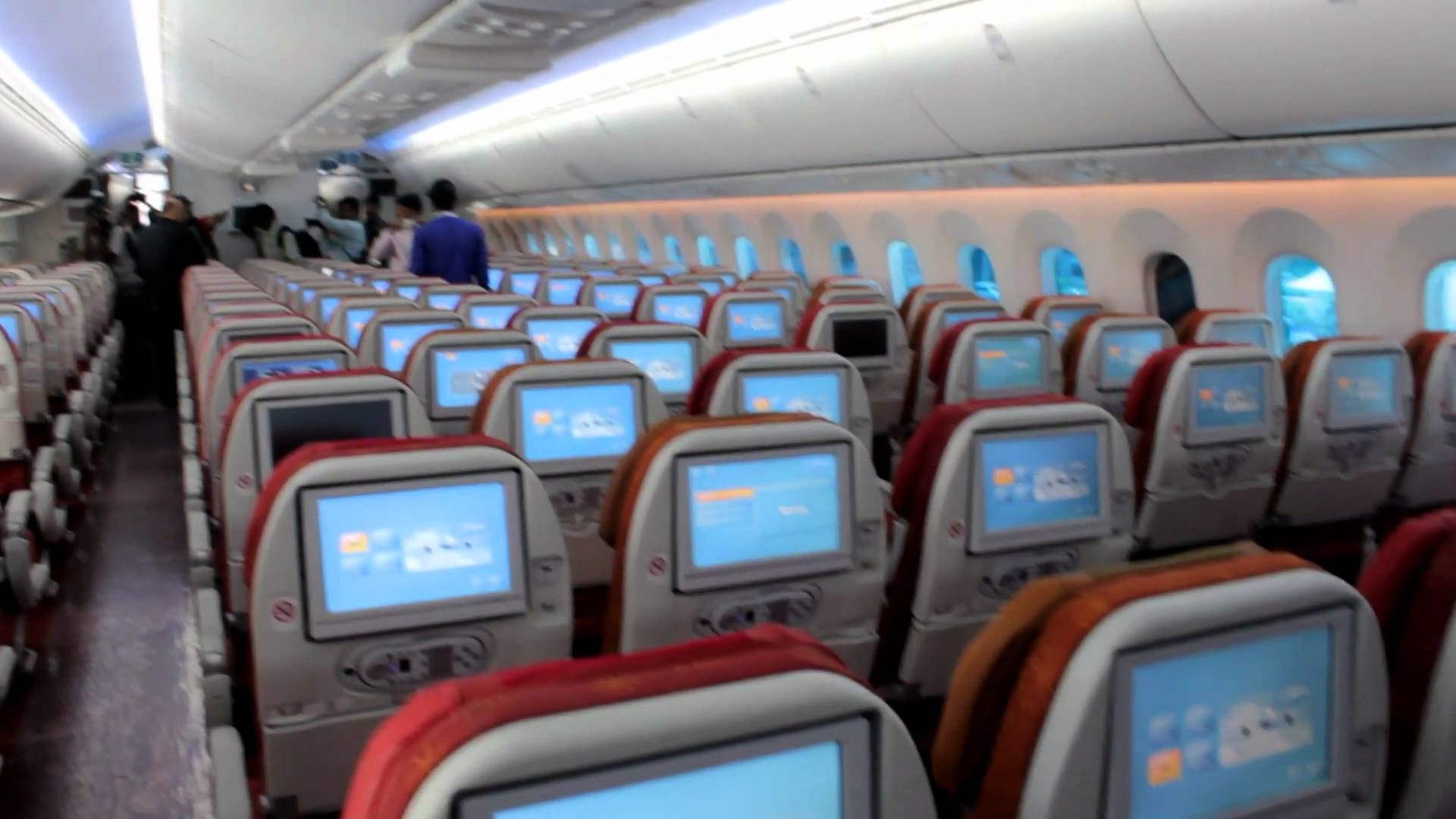
Ultra-long, non-stop flights are set to rule the skies again. Over the past few weeks, major airlines have announced dizzyingly long flights that will go halfway round the earth without kissing it midway.
Air India will fly the over 17-hour Delhi-San Francisco route from December 2. The Maharaja was planning a non-stop on the Bengaluru-SFO route, which at 18 hours would have been the world's longest flight for at least two years, but then opted for the Delhi connection.
Singapore Airlines announced this month that it would launch the world's longest non-stop in 2018, when it will fly from the island state to New York City in 19 hours.
So just what has brought the ultra-long flights back in favour? Security-check hassles at multiple airports and low fuel prices are two main reasons. Boeing chairman James McNerney says, "People don't want to go through hubs, get off planes, go through security again and then get back on plane. They want to fly point to point."
The new-generation planes from Boeing and Airbus are more fuel-efficient, enabling airlines to offer lower fares and lure even economy class passengers to sit in cramped seats - often an uncomfortable 10 abreast - for up to 19 hours.
A senior official at AI, which is looking at more non-stops to North America, said passengers increasingly prefer the shortest possible travel time for long journeys rather than "hop-skip-and-jump services".
"A one or two-stop flight means that passengers have to get off the aircraft, wait till it is cleaned and reboard. Some airports, like those in Europe, are inconvenient for a stopover as the passenger has to get off, go through security and reboard despite coming from a sterile zone," he points out.
AI says its non-stops to the U.S. are popular with businessmen, who have dinner in India before taking off and then have breakfast in New York or Chicago, because they save time on the under 15-hour, West-bound flight. "The airline also saves by eliminating landing costs at an intermediary station. It is a win-win for both passengers and airlines," the airline official said.
Etihad's VP (India) Neerja Bhatia said the Abu Dhabi-based airline's almost 16-hour non-stops to San Francisco, Los Angeles and Dallas are a big hit with passengers, which is why they are always looking to open more long-distance routes.
"Guests increasingly tell us that direct, long-haul flights save time, are more convenient than transits and cut out the need for travellers to fly through, say, European airports to get to their final destination in North America. As our hub is centrally located in the Gulf, we have the range to connect to virtually any major point in the world non-stop."
Changing technology plays a key role here. "Ultra-long flights were not economically viable earlier due to payload limitations, airspace flying restrictions and high oil prices. With the development of more fuel-efficient aircraft, better airport infrastructure capable of handling large numbers of passengers and improved flight routings, these restrictions have partially been overcome making long-haul flying more viable economically," Bhatia said.
Bell Textron delivered new Texas Department of Public Safety’s Bell 407GXi. This delivery comes on the heels of an announcement made during Verticon earlier this year h...
Air passenger rights in Europe are at a critical crossroads. On June 2, the European Union’s Conciliation Committee will meet for a final round of negotiations on the revision of the European re...
While the geopolitical situation contributed to economic uncertainty in Q1, market fundamentals remained healthy. The quarter showed strong demand for business aviation, reflected in increasing aircra...
Kansai International airport (KIX) reaches new milestone in its development with the inauguration of the completed international trade zone. This completion marks the conclusion of the extensive renov...