


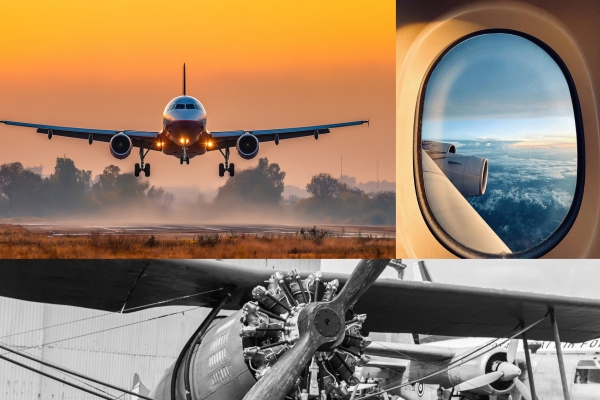
Commercial aviation has transformed the way people live, work and explore the world. What was once an exclusive experience reserved for the wealthy has become a normal part of everyday life for millions. The journey from fragile early aircraft to today’s global airline networks is a story of innovation and changing public attitudes. Understanding how flying became accessible helps explain why air travel now feels so routine, yet remains one of the greatest achievements of modern transport.
The early days of flight
In the early twentieth century, powered flight was still a novelty. The first commercial flights were unreliable and extremely expensive. Aircraft were uncomfortable and heavily affected by weather. Early passengers were often wealthy individuals, business leaders or those seeking adventure rather than convenience. Airlines operated limited routes and schedules, and safety standards were still developing.
Despite these challenges, early aviation captured public imagination. Governments and private investors recognised the potential of air travel for mail delivery, military use and eventually passenger transport. These early experiments laid the groundwork for a future industry, even though flying remained far from accessible to the average person.
The impact of technology
One of the biggest factors in making flying more accessible was rapid technological advancement. Aircraft design improved dramatically between the 1930s and 1950s. Stronger materials, more reliable engines and better navigation systems increased safety and efficiency. Planes could fly further, faster and with more passengers on board.
The introduction of pressurised cabins made long distance travel more comfortable, while advances in aerodynamics reduced fuel consumption. These improvements lowered operating costs for airlines, which gradually translated into more affordable ticket prices. As aircraft became more dependable, public confidence in flying grew, encouraging wider adoption.
The jet age and global expansion
The arrival of jet aircraft in the late 1950s marked a turning point for commercial aviation. Jets significantly reduced travel times and opened up international routes that were previously impractical. Flying between continents became not only possible but increasingly attractive for both business and leisure.
During this period, airlines expanded rapidly, and airports developed into major transport hubs. Governments invested heavily in aviation infrastructure, recognising its importance for trade, tourism and national connectivity. While flying was still relatively expensive, it was no longer limited to a small elite.
Regulation and the changing airline market
For many years, air travel was tightly regulated, with governments controlling routes and pricing. While this helped maintain stability, it also kept fares high. A major shift came with deregulation, particularly from the late twentieth century onwards. Airlines gained more freedom to set prices, choose routes and compete with one another.
This competition drove innovation and efficiency. Low-cost carriers emerged, offering no-frills flights at significantly reduced prices. Passengers could choose to pay only for what they needed, making air travel accessible to a much broader audience. Weekend city breaks and budget holidays became common, changing travel habits across the UK and beyond.
The role of airports and infrastructure
Airports also played a key role in making flying more accessible. Modern terminals were designed to handle higher passenger volumes efficiently, with clearer layouts and improved security processes. Regional airports expanded, allowing people to fly without travelling long distances to major hubs.
Improved transport links between airports and city centres made flying more convenient. Over time, airports evolved into commercial spaces offering shopping, dining and leisure options. For many travellers, airports became part of the overall experience rather than just a point of departure.
Affordability and the modern passenger
Today, flying is considered a normal option for travel, comparable to rail or road in many situations. Affordable fares have allowed people from different backgrounds to explore new destinations, visit family abroad or pursue career opportunities overseas. The rise of online booking platforms has made comparing prices simple, further empowering consumers.
In the same way that people enjoy casual entertainment such as streaming services or leisure activities like visiting a lotto casino, air travel has become woven into everyday life rather than viewed as a luxury. It is something people plan for, budget around and often take for granted, which highlights just how far commercial aviation has come.
Safety and public trust
Another important factor in accessibility is trust. Over decades, aviation safety standards have continued to improve. Strict regulations, rigorous pilot training and advanced monitoring systems have made flying one of the safest forms of transport. Each improvement has strengthened public confidence, encouraging more people to fly regularly.
Clear communication from airlines and aviation authorities has also helped reassure passengers. As understanding of aviation grew, fear and uncertainty gradually declined for many travellers.
Looking Ahead
Commercial aviation continues to evolve. Airlines are investing in more fuel-efficient aircraft, exploring sustainable fuels and improving passenger comfort. While challenges remain, including environmental concerns and rising operational costs, the goal of keeping flying accessible remains central to the industry.
The story of commercial aviation is ultimately about progress and inclusion. From its exclusive beginnings to its role as a cornerstone of modern life, flying has been shaped by technology, competition and changing expectations. As innovation continues, aviation is likely to remain a vital and accessible way for people to connect with the world around them.
Bell Textron announced the order of the first Bell 407GXi helicopter in India to TransBharat Aviation Private Limited, one of India’s most established non-scheduled rotary-wing operators. F...
Liebherr-Aerospace and Loong Air launched a long-term collaboration, with Liebherr-Aerospace providing major repair and re-coring services for the heat transfer equipment on Loong Air’s A320ceo/...
Which strategy leads to cost-effective, climate-friendly aviation in 2070? Four scenarios from the Bauhaus Luftfahrt think tank illustrate the impacts of different transformation paths. Key points: In...
AIR announced a strategic partnership with Dynon Avionics as its exclusive avionics provider across its aircraft portfolio. The portfolio includes the AIR ONE personal eVTOL and the company&...