


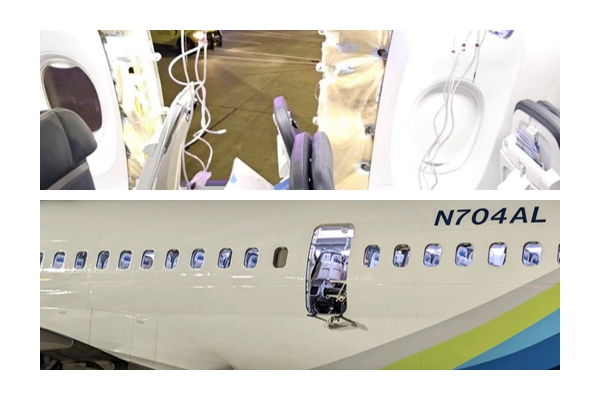
On Saturday, January 6, 2024, the U.S. FAA temporarily grounded certain Boeing 737 MAX 9 aircraft for immediate inspection following an Alaska Airline-operated jet's emergency landing after a large section of the aircraft blew out shortly after takeoff. While only minor injuries were reported, the incident raises broader concerns about the safety of the aircraft for both the manufacturer and operators and heightens scrutiny on inspection requirements. This is yet another issue with the 737 MAX line for Boeing that appears to be plagued by design/production and safety issues. We do not anticipate a material credit impact on airlines as a result of this incident unless it results in a prolonged grounding of the impacted aircraft.
The FAA's order to ground the B 737 MAX 9, which some other regulatory bodies worldwide also adopted, should affect an estimated 171 aircraft out of a total 215 in service worldwide, most of which operate in the U.S. Alaska Airlines and United Airlines are two major operators of B 737 MAX 9 aircraft, with 65 and 79 aircraft in service, respectively, according to Cirium data. As a result of the FAA inspection mandate, both airlines were forced cancel a number of flights on Saturday and Sunday, representing 20% of scheduled flights on Sunday for Alaska Airlines and 8% for United Airlines. As of this publication, other top operators including Copa Airlines (29 in service according to Cirium), Aeroméxico (19 in service), and Turkish Airlines (5 in service) have also announced temporary grounding of the planes. There are no affected planes currently in operation in the European Union or the UK. We do not publicly rate any of the affected airlines. The inspection is likely to continue this week as it requires between four and eight hours per aircraft.
The current incident is not unprecedented in the airlines sector or in the Boeing MAX line. There was an extended grounding period of approximately 1.5 years for Boeing 737 MAX aircraft due to safety concerns following two plane crashes in 2018 and 2019, which materially affected airlines that operated the aircraft as well as the manufacturer itself. That said, the current issues under investigation may turn out to be relatively minor, affecting a smaller number of aircraft for a shorter timeframe.
At this stage, the FAA’s inspection directive is limited to only a small portion of the total B 737 MAX fleet, but this will still temporarily disrupt operations for certain airlines that have a higher proportion of affected planes (such as Alaska Airlines and United Airlines). While we do not expect a significant long- term impact on the credit profile of the airline sector or airlines themselves unless the current issue results in a prolonged aircraft grounding (such as the identification of a fundamental design flaw), this incident highlights the sector's vulnerability to operational disruptions as well as manufacturing and design vulnerabilities of aircraft models. Such disruptions could be outside of airlines’ control and could affect short-term travel activity.
Embraer and Azorra have signed an additional firm order for 15 E195-E2 aircraft, with purchase rights for 15 additional jets, further strengthening the long-standing partnership between the two compan...
AIR announced a strategic partnership with Dynon Avionics as its exclusive avionics provider across its aircraft portfolio. The portfolio includes the AIR ONE personal eVTOL and the company&...
dnata has secured a new multi-year contract with Silk Way Group to provide cargo and freighter handling services at Singapore Changi Airport (SIN), further strengthening a longstanding global par...
Bombardier and ELIE SAAB unveiled a new chapter in business aviation: a bespoke cabin design for the Global 8000 aircraft that redefines the onboard experience through the lens of haute cout...