


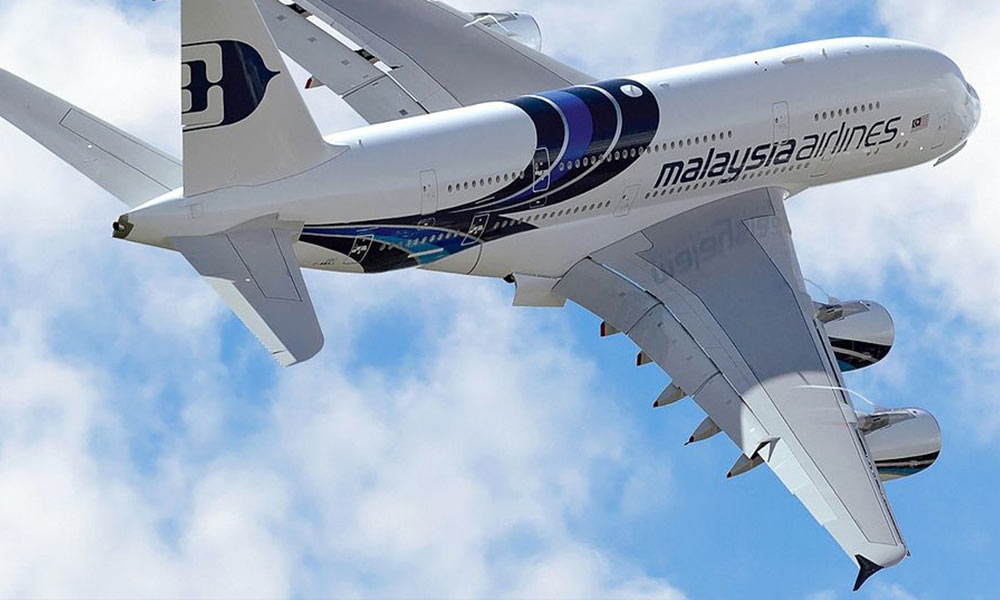
Malaysia Airlines Berhad (MAB), the flag carrier airline of Malaysia and a member of the Oneworld airline alliance, will no longer cut its network capacity in 2016.
Malaysia Airlines will now focus on expanding its network to emerging markets in the region instead, as the carrier sets its eyes on being profitable by 2018.
Christoph Mueller, newly appointed chief executive of Malaysia Airlines told:
“The good news is that the capacity cuts are behind us. We will not cut our routes further. We now have to regain altitude and we have to become profitable. That is our plan in two years’ time.”
Malaysia Airlines’ new CEO also said the airline plans to expand its network to countries that are currently undergoing economic developments as well as those that Malaysia will establish new trade relationships with.
Christoph Mueller, however, declined to give any hint on the exact destinations the carrier is planning to fly to.
Malaysia Airlines has announced a series of route cuts as part of its rationalisation plan since 2012.
Malaysia Airlines previously axed Buenos Aires, Cape Town, Johannesburg and Rome in 2012 and Los Angeles in 2014 under the watch of the previous head Ahmad Jauhari Yahya.
Malaysia Airlines also cut Kunming, Krabi, Frankfurt, Kochi, Brisbane, Istanbul and Male out of its network in 2015.
Malaysia Airlines’ recent network cuts include Amsterdam, Paris and Dubai as part of its codeshare deal with Dubai-based Emirates Airline.
The move will see Malaysia Airlines relying on the Emirates’ codeshare to destinations in Europe, the United States, Africa and the Middle East. In return, Emirates will bank on MAB’s extensive network in Asia Pacific, Asean and domestic routes in Malaysia.
Malaysia Airlines will also focus on cutting its operational expenditure by reducing its unit cost as the airline plans to weather out of its current financial struggles.
Malaysia Airlines CEO Christoph Mueller added:
“We will lower our absolute cost base and we also want to increase our production in this three to four years’ time. So both factors together will result in 20 per cent unit cost decrease.”
Christoph Mueller added that Malaysia Airlines would also review its jet fuel hedging strategy in a meeting with its board of directors in 3 weeks, as part of the airline’s cost-cutting measures.
Although the price of Brent crude oil is at its lowest, Malaysia Airlines CEO viewed that fuel hedging comes at a cost and the airline is currently very restricted on its cash.
“We will decide whether we will be active in the fuel hedging market in our upcoming meeting. Hedging is very often perceived as speculative argument in the airline business. It’s really complex but the truth about hedging is, it’s a risk management tool,” Christoph Mueller said.
“Oil is cheaper today than it is next week or in three weeks or in three years. But of course hedging fuel at current prices makes sense but who knows whether the fuel price will fall further,” Malaysia Airlines CEO said.
Malaysia Airlines owns two subsidiary airlines: Firefly and MASwings.
Firefly operates scheduled flights from its two home bases Penang International Airport and Subang International Airport. The airline focuses on tertiary cities. MASwings focuses on inter-Borneo flights.
Malaysia Airlines struggled to cut costs to compete with new, low-cost carriers in the region since the early 2000s.
Malaysia Airlines initiated a turnaround plan after large losses beginning in 2011 and cut routes to prominent, but unprofitable, long-haul destinations, such as the Americas (Los Angeles and Buenos Aires) and South Africa.
Malaysia Airlines lost two aircraft in 2014 – Flight 370 and Flight 17 – less than five months apart with a total of 537 people killed, exacerbating the airline’s financial troubles and leading to the renationalisation of Malaysia Airlines.
Malaysia Airlines has 77 active aircraft in its fleet with a further 21 in storage as of February 2016.
Malaysia Airlines has an average fleet age of 3.7 years.
While the geopolitical situation contributed to economic uncertainty in Q1, market fundamentals remained healthy. The quarter showed strong demand for business aviation, reflected in increasing aircra...
Bell Textron delivered new Texas Department of Public Safety’s Bell 407GXi. This delivery comes on the heels of an announcement made during Verticon earlier this year h...
Affirming Cathay’ ongoing commitment to growing Hong Kong’s connectivity with Belt and Road countries, Cathay Pacific is pleased to announce plans to launch direct flights to Almaty,...
dnata has secured a new multi-year contract with Silk Way Group to provide cargo and freighter handling services at Singapore Changi Airport (SIN), further strengthening a longstanding global par...