


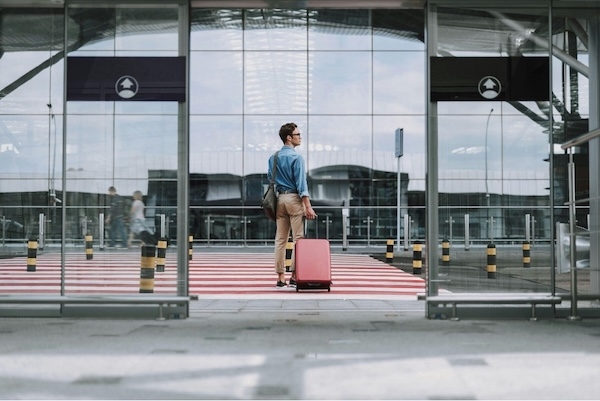
Flying direct from London to Tokyo is more than just a jump across time zones—it’s a leap into a world of new experiences, business opportunities, and cultural discoveries. But between pre-flight prep and navigating Narita or Haneda, there’s one critical detail travelers often overlook: staying connected. Enter the digital SIM card for Japan, a seamless solution that ensures you stay online—without juggling physical SIM swaps or hunting for Wi‑Fi hotspots.
The connectivity challenge of ultra‑long haul
Nonstop flights between London and Tokyo can stretch beyond 11 hours. While in the air, you might rely on onboard Wi‑Fi (often at a premium), but once you disembark, the challenge shifts:
Traditional solutions—airport kiosks or vending machines—come with frustrating downsides: long queues, language barriers during registration, and limited data plans that may run out before you’ve exited customs.
That’s why a digital SIM card for Japan matters: it’s already set up by the time you land, no hardware required, and data starts the moment your plane touches down. No delays, no hidden registration hassles.
What is a digital SIM card—and how it differs from physical SIMs
A digital SIM card (also called an eSIM or embedded SIM) is completely virtual—downloaded directly onto a compatible device through an app or QR code. You don’t receive a plastic card, and there’s no swapping in crowded terminals. Key advantages include:
For long-haul travelers, this means a smooth transition from air to ground—critical when you land after a night flight and don’t want to fumble with connectivity.
Navigating Japan’s telecom landscape
Japan’s telecom ecosystem is robust, reliable, and fast—ranking among the top 5 in mobile internet performance globally. Official statistics on network coverage can be found on Japan’s Ministry of Internal Affairs and Communications site, which highlights 99% population-level 4G access and ongoing 5G deployments.
But there’s a catch: local SIMs—issued by Japanese MVNOs (Mobile Virtual Network Operators)—still require in-person registration, passport scanning, and installing physical cards. These are often limited to 30-day plans and may not include international voice capabilities—critical when calling employers or home offices back in London or elsewhere.
In contrast, digital SIM cards simplify the process:
Airport arrival: from plane seat to connection in under 10 minutes
Imagine landing at Narita at 7:45 am after a direct 12‑hour flight. You’ve just cleared customs; your luggage arrives. You skip the SIM kiosk lines and instead head for the train or limousine bus—because your data and phone number are already active. No fumbling, no extra steps.
This instant readiness is more than convenience—it’s efficiency. Especially when catching an early‑morning meeting in Tokyo, coordinating with a shuttle, or simply letting family know you arrived safely.
Digital SIM cards from trusted providers like Holafly (for instance, via the link earlier in the introduction) are already optimized for this level of performance.
Official support: what Japan’s foreign travelers should know
Japan’s Ministry of Foreign Affairs provides extensive guidance on staying connected abroad, including recommendations for mobile data security, emergency contact information, and SIM‑registration rules. The MOFA points out that travelers entering Japan are required to retain their contact information, but digital SIMs expediently fulfill that requirement without extra paperwork.
This matters—for visas, emergency prep, and compliance.
Staying connected: business travelers vs. leisure jetsetters
A business traveler arriving in Tokyo first thing in the morning after an overnight flight wants:
Digital SIMs often offer local Japanese numbers plus competitive international calling rates—either included or via top‑up. Physical SIMs rarely bundle that in; you’d need to buy additional VoIP plans or roam internationally at steep fees.
Holidaymakers may prioritize:
Digital SIM providers often include generous data limits—some even unlimited—at flat rates. As long as your device supports eSIM, you’re covered.
Cost comparison: digital SIMs vs. physical SIMs for Japan
Heads-up: All prices are indicative; check provider sites for exact current rates.
|
Feature |
Physical SIM (e.g. 30-day tourist SIM) |
Digital SIM |
|
Price (1 GB/day avg) |
¥3,000 (~£18) |
~£25–35, data from 5GB to 20GB |
|
Activation ease |
Need kiosk + passport scan |
Download QR in advance, auto-activate |
|
Data speed / coverage |
Excellent in city, weaker in rural |
Same networks via host partners |
|
Call services / VoIP |
Usually data-only |
Add-ons or VoIP via provider |
|
Multi-country travel |
Requires buying new cards per country |
Many providers offer regional plans |
|
Environmental footprint |
Plastic & packaging waste |
Fully digital, zero plastic |
Digital SIMs often cost slightly more upfront—but the time savings, data assurances, and comfort of setup far outweigh kiosk hassles or buying additional cans of data on the fly.

Switch easily between your UK SIM (for WhatsApp, Apple ID, banking alerts) and the Japanese eSIM for local data—optimized automatically.
Japan is earthquake-prone, and services like Japan’s Disaster Message Board rely on phone connectivity to share evacuation or safety info with residents and travelers. A reliable digital SIM ensures you receive urgent alerts—potentially life-saving in more remote mountainous or rural stays.
Tips for maximizing a digital SIM on a long-haul route

At the airport: what to do if you need help
Even digital services aren’t perfect, so keep these handy:
Final takeaways for global travelers
Long‑haul travel from London to Tokyo exemplifies modern aviation’s interconnected future. For passengers seeking efficiency, reliability, and digital continuity, a digital SIM card provides the seamless bridge between sky and street. Its connectivity is simplified—no kiosks, no guessing, just connection that works from the moment your plane touches ground.
Whether you’re landing for business negotiations, cultural immersion, or leisure exploration, this smart travel solution aligns with the pace of your journey—just as aviation continues to align with the aspirations of global passengers
Images from Unsplash
Baltic Ground Services, an international provider of ground handling and aircraft fueling services, has expanded its cooperation with Turkish leisure carrier Freebird Airlines across several airports...
The A350-1000ULR (MSN 707), the first of 12 aircraft ordered by Qantas has completed its first flight in Toulouse, France. The aircraft, fitted with special flight test instrumentation, flew for three...
AERO 2027, taking place from April 14-17, 2027, will feature a further developed concept designed to build on the great success of this year’s event. In 2026, 860 exhibitors from 50 countries to...
Affirming Cathay’ ongoing commitment to growing Hong Kong’s connectivity with Belt and Road countries, Cathay Pacific is pleased to announce plans to launch direct flights to Almaty,...